
Wednesday, November 10, 2010


Thursday, November 4, 2010
Legopithecus rosalia kenneyi
Wordless Wednesday are, well, meant to be "wordless" but I've gotten a lot of questions about my Wordless Wednesday post yesterday so I've decided to include more photos and write a little bit about these cute critters.


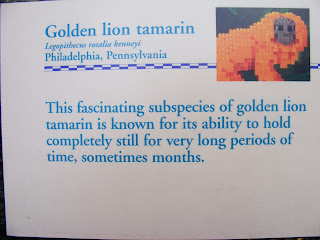


I was up in Philadelphia for the Halloween weekend and no trip to Philadelphia is complete without me going to The Philadelphia Zoo. While there, I managed to catch the Creatures of Habitat exhibit. The exhibits are made from LEGO bricks (OMG childhood memories) and my favorite were definitely the ones I've posted on my Wordless Wednesday post yesterday.
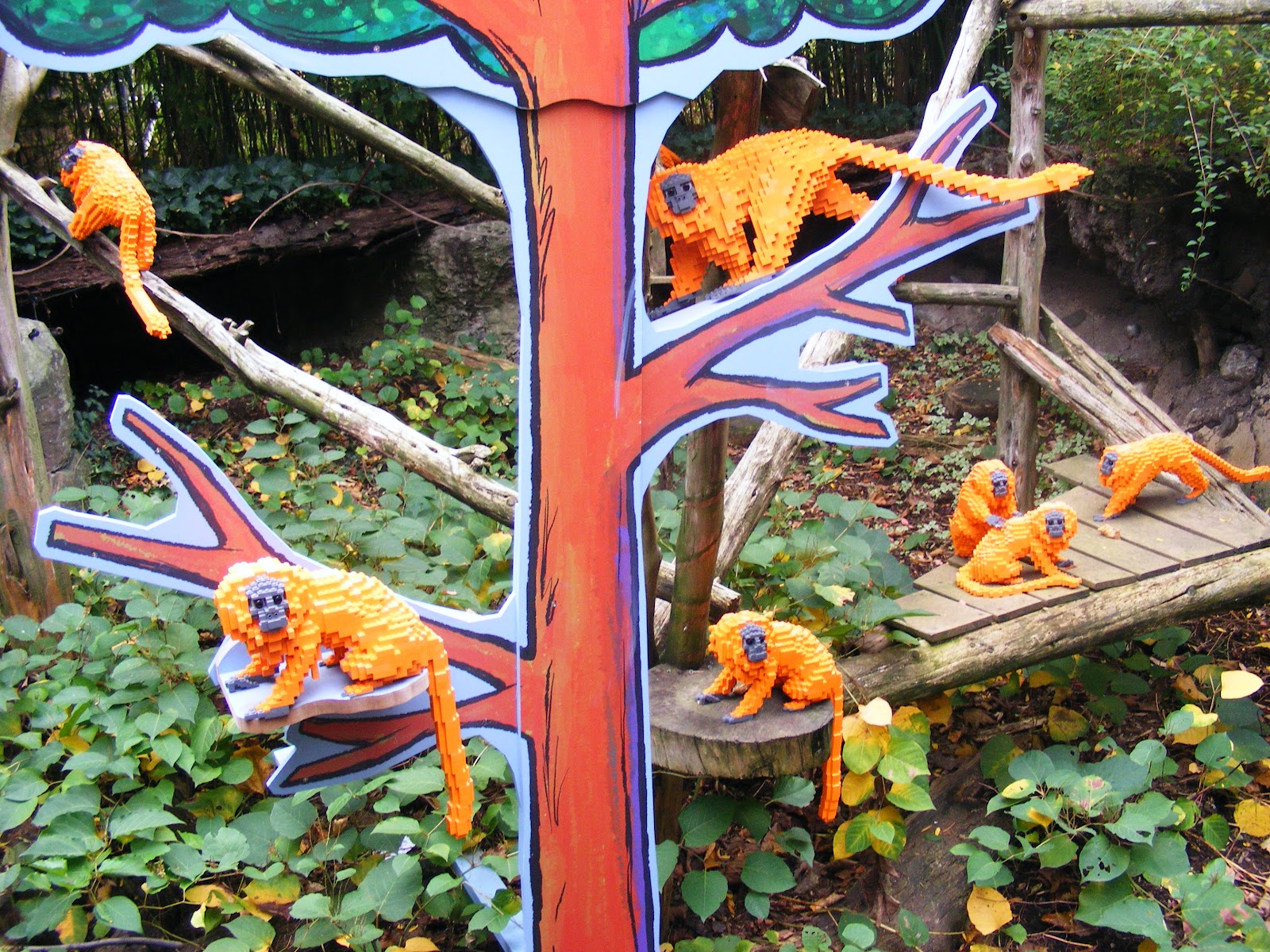
They are, of course, the Golden Lion Tamarins (Leonpithecus rosalia) but the folks that made them did have a sense of humor. If you actually read the signs posted by the exhibit, you'll realize that the Latin name for these critters are Legopithecus rosalia kenneyi. Hah! Legopithecus (Lego ape). Brilliant. Although, for argument sake, Golden Lion Tamarins are not apes but monkeys.
But why the kenneyi subspecies name? One of the artists that made these Lego sculptures is Sean Kenney, in which I would think where the subspecies name comes from (It's probably an Easter egg). I wonder what they plan to do with these sculptures when the exhibition is done. I'd love to get my fingers on one (maybe two). Here are more Lego Golden Lion Tamarin pictures from the Creatures of Habitat exhibit. Enjoy!

Only 12 individuals of this subspecies left!

HAHAHA! Brilliant.

Grooming.

Pirate tamarin. Yarrr!

Golden Lion Tamarin using a tool (stick). Not sure they do though ...
Wednesday, November 3, 2010

Thursday, October 28, 2010
Rhinopithecus strykeri: Hunted and eaten by locals
With the announcement of the newly discovered Rhinopithecus strykeri yesterday, we were only given a glimpse of this new species through an illustration and a computer modified image (Photoshopped none the less). I bet everyone was wondering why aren't there any pictures of these snub-nosed monkeys.
.jpg)
Ponder no more. Here's a photo from National Geographic showing local hunters with a dead R. strykeri that's about to be dinner (photo by Ngwe Lwin). The researchers (Geissmann et al., 2010) were not able to procure a photo of any live R. strykeri. Supposedly, they captured some wild ones but they had escaped before pictures were taken. R. strykeri are threatened by hunting and habitat destruction due to logging.
Reference:
Geissmann. T, Lwin. G, Aung. S, Naing Aung. T, Aung. Z M, Hla. T, Grindley. M, Momber. F, “A new species of Snub-nosed monkey, Genus Rhinopithecus Milne-Edwards, 1872 (Primates, Colobianae), From Northern Kachin State, Northeastern Myanmar”, American Journal of Primatology, Wiley-Blackwell, October 2010, DOI: 10.1002/ajp.20894
Edit: To request a copy of the paper by Geissmann et al. (2010), click here.
.jpg)
Reference:
Geissmann. T, Lwin. G, Aung. S, Naing Aung. T, Aung. Z M, Hla. T, Grindley. M, Momber. F, “A new species of Snub-nosed monkey, Genus Rhinopithecus Milne-Edwards, 1872 (Primates, Colobianae), From Northern Kachin State, Northeastern Myanmar”, American Journal of Primatology, Wiley-Blackwell, October 2010, DOI: 10.1002/ajp.20894
Edit: To request a copy of the paper by Geissmann et al. (2010), click here.
Wednesday, October 27, 2010
New snub-nosed monkey from Northern Myanmar: Rhinopithecus strykeri
As if fate is testing me, I just had a Facebook conversation yesterday about new species "discoveries" and how ethnocentric they are. I mean, really ... do you really think that until these new species are "discovered" by scientists, no one (even people that lives in the area) knew of these animals? Probably not. Using the word "discovered" to formally acknowledge a species seems antediluvian.
_Martin+Aveling-FFI_+(2).jpg)
Anyway, a team of primatologists supposed discovered a new species of snub-nosed monkey in Northern Myanmar during their Hoolock Gibbon Status Review early this year. The new species was formally named Rhinopithecus strykeri, after the President and Founder of the Arcus Foundation Jon Stryker. The locals do have a name for these snub-nosed monkeys. They call them "mey nwoah" or "monkey with an upturned face".
This primate reported has an upturned nose which, according to the locals, made them sneeze when it rains. Locals observed that to avoid getting rain water into their nose, R. strykeri would sit with their heads tucked in between their legs. Their pelage is entirely black except for a white tuft on their ears, chin beard and the perineal end. It has a relatively long tail, about 140% of its body. R. strykeri is the first species of the Rhinopithecus genus to be found in Myanmar. The other four species (R. roxellana, R. bieti, R. brelichi and R. avunculus) are found in China and Vietnam. R. strykeri's range is limited only to the Maw River area. There are estimated about 260 to 330 individuals of R. strykeri left in the wild, making them Critically Endangered according to IUCN.
Read more at New Snub-Nosed Monkey Discovered in Northern Myanmar.
_Martin+Aveling-FFI_+(2).jpg)
While there are currently no images of living specimens of this new species available Fauna & Flora International has commissioned an artists impression of the new species in its habitat, based on field sightings and a carcass of the newly discovered species. Image from Martin Aveling/Fauna & Flora International.
Anyway, a team of primatologists supposed discovered a new species of snub-nosed monkey in Northern Myanmar during their Hoolock Gibbon Status Review early this year. The new species was formally named Rhinopithecus strykeri, after the President and Founder of the Arcus Foundation Jon Stryker. The locals do have a name for these snub-nosed monkeys. They call them "mey nwoah" or "monkey with an upturned face".
This primate reported has an upturned nose which, according to the locals, made them sneeze when it rains. Locals observed that to avoid getting rain water into their nose, R. strykeri would sit with their heads tucked in between their legs. Their pelage is entirely black except for a white tuft on their ears, chin beard and the perineal end. It has a relatively long tail, about 140% of its body. R. strykeri is the first species of the Rhinopithecus genus to be found in Myanmar. The other four species (R. roxellana, R. bieti, R. brelichi and R. avunculus) are found in China and Vietnam. R. strykeri's range is limited only to the Maw River area. There are estimated about 260 to 330 individuals of R. strykeri left in the wild, making them Critically Endangered according to IUCN.
Read more at New Snub-Nosed Monkey Discovered in Northern Myanmar.
Reference:
Geissmann, T. Lwin, G. Aung, S. Naing Aung, T. Aung, ZM. Hla, T. Grindley, M. Momber, F. A new species of Snub-nosed monkey, Genus Rhinopithecus Milne-Edwards, 1872 (Primates, Colobianae), From Northern Kachin State, Northeastern Myanmar. American Journal of Primatology, Wiley-Blackwell, October 2010, DOI: 10.1002/ajp.20894
Subscribe to:
Posts (Atom)